AI for Good: Driving AI Transformation with Community Trust
Published On: October 7, 2026
The most consequential question about AI in education is who shapes how it gets used, and whether the communities on the receiving end trust the people doing the shaping.
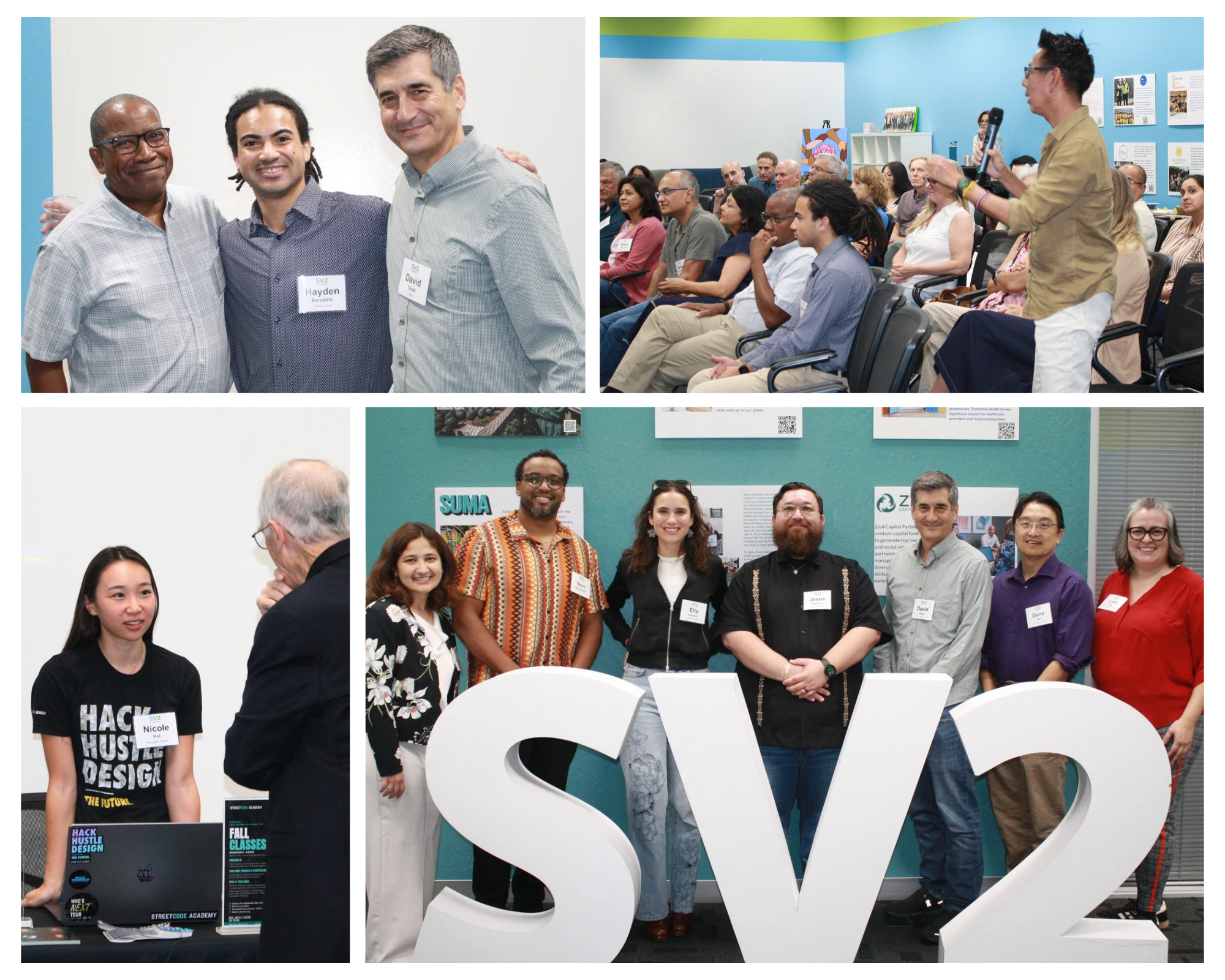
That question framed AI for Good: Driving AI Transformation with Community Trust, which SV2 hosted on October 6. For the first time, we brought our for-profit investees and our nonprofit grantees to the same table. Each works on a different piece of education and skilling: career exposure for teens, AI-native curriculum co-designed with school districts, and free tech access and training for neighbors who have been left out of past technology waves.
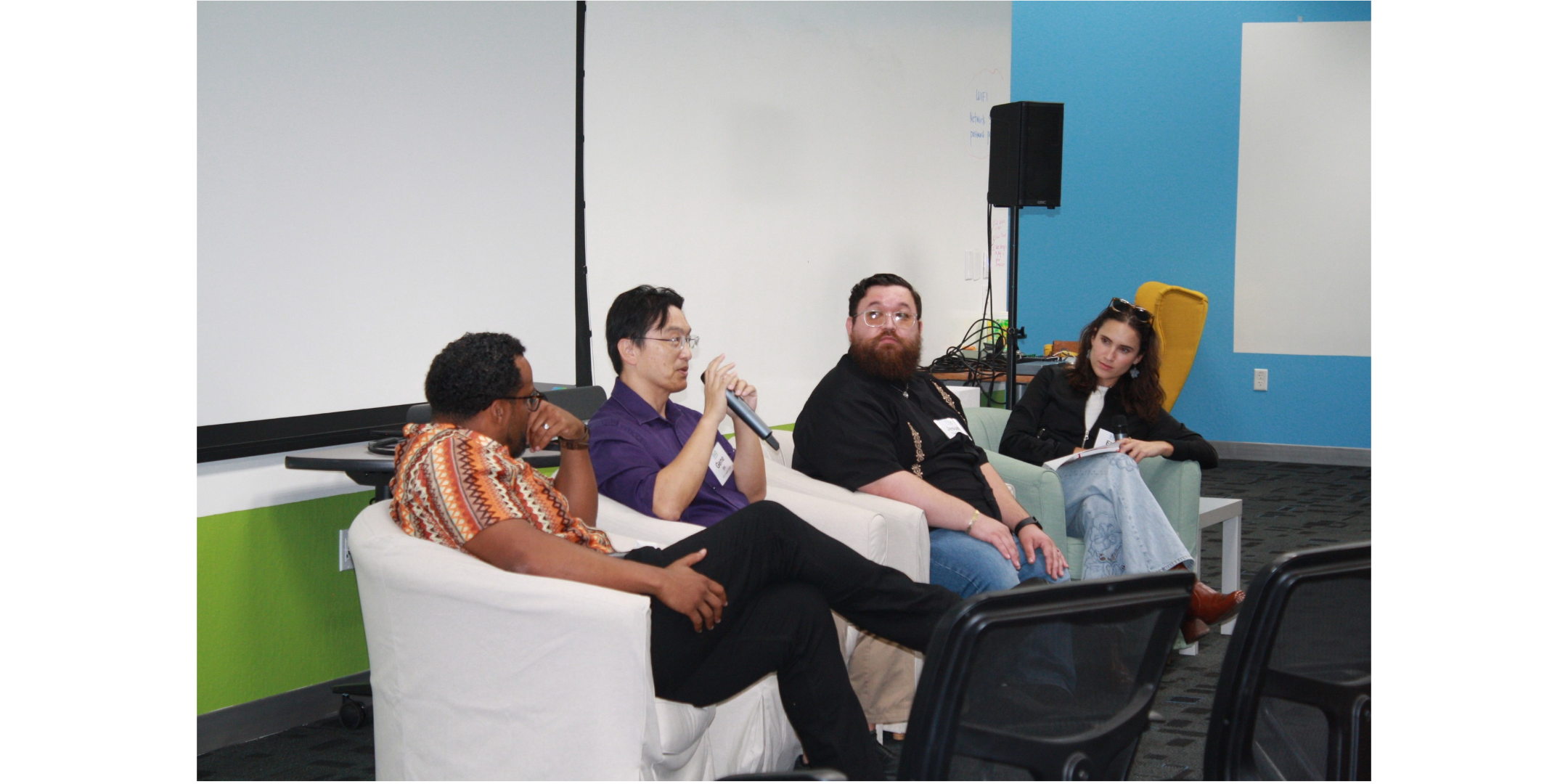
KQED journalist Ella Jackson, who reports on energy and AI, opened the evening and moderated a conversation with Remi Sobomehin of Ambition Angels, Gene Shi of Learning Genie, and Jesus Guerrero of StreetCode Academy. What emerged was a shared playbook, shaped by how close each organization works to the people it serves.
Transformation Starts Inside the Building
Before an organization can earn community trust on AI, it has to build fluency within its own team. The panelists described a consistent first move: name an internal AI champion. That person upskills first, tracks a landscape that shifts month to month, and keeps the team’s own tools and practices current.
This sounds operational, but it is also a matter of credibility. An organization asking parents, teachers and teens to adopt AI responsibly needs to have done the work itself: to know where the tools add the most value and what it feels like to change how you work. The best guides through a transition are the people who have made it themselves.
From Screen Time to Screen Quality
Parents’ concerns about screen time came up repeatedly, and panelists took them seriously. Their answer was to reframe the conversation around screen quality: what young people are actually doing with their time on screens.
The line runs between consuming AI and directing it. A teen scrolling AI-generated content is a consumer. A teen using AI to prototype an idea, stress-test their reasoning, or explore a career they have never seen up close is exercising agency. The panel’s view was that agency is itself a skill. It is built through intentional teaching, and building it is how organizations earn parents’ trust.
Access Paired with equipped educators
Agency cannot develop without access, and access is still unevenly distributed. Where affordability is the barrier, that means providing laptops and paid AI credits.
Equally important are the people: coaches and teachers who know how to teach when AI can produce the answer. One practice the panel described captures the shift. Students may use AI to solve a problem, but they must then explain the rationale: why the answer holds, and what they actually understand.
Assessment moves from the output to the thinking behind it. This works best when educators are trained to design for it, which makes teacher and coach upskilling the hidden infrastructure of AI in education.
Humanity is the safeguard
If one thread ran through the evening, it was that the human role grows as AI spreads. Responsible use means taking safety and privacy seriously. It means guiding kids and teens as they learn to wield a powerful tool. Both take intention.
That guidance comes from adults young people already trust: teachers, coaches, mentors and parents. Which brings us back to upskilling. Equipping those adults to keep pace with their students is what keeps the guardrails strong. Investing in educators is how safety and privacy move from policy language into daily practice.
The White Space Ahead
Panelists see a lot of white space in this field, and much of it belongs to people. As AI is woven into learning and work, new roles are taking shape: people who translate between tools and communities, who design guardrails, and who coach judgment and reasoning. Trust becomes a function someone has to build and maintain.
For mission-driven organizations, this is an opening. The groups closest to communities are best placed to define what responsible AI looks like on the ground, grounded in what they see in classrooms and neighborhoods every day.
What this means for funders and builders
For SV2, the evening reinforced why we fund and invest across the nonprofit and for-profits. The challenges our grantees and investees face are converging, and so are the answers. Three takeaways stand out:
- Fund internal capacity. An AI champion and team upskilling lay the foundation for credible community work.
- Pair access with educators. Devices and credits deliver the most value alongside teachers and coaches equipped to teach agency and reasoning.
- Treat trust as the outcome. Safety, privacy and guidance are what make adoption last.
The true measure of AI transformation in education is how many students learn to direct these tools, with trusted adults beside them.
The pattern is not limited to education but also applies to other sectors. Adoption moves fastest where one person inside the organization learns first, and where trust is built with the community.
Thank you to Ella Jackson for moderating, and to Remi Sobomehin, Gene Shi and Jesus Guerrero for a candid and generous conversation.