Innovative Finance Spotlight Fall 2026
Most of the capital in the Bay Area moves in one of two directions. Grants go to nonprofits, and venture equity goes to startups built for fast growth and a large exit. Many organizations doing important work fit neither path. A social enterprise can land a large order long before it is ready for commercial investors, and still lack the cash to fill it. Some nonprofits would get more from a loan they repay than from a one-time grant. Around the world, entrepreneurs in rural and low-income communities need small loans that banks won’t make. At our second Innovative Finance Spotlight on November 5, we spent the afternoon on financing tools built for these cases.
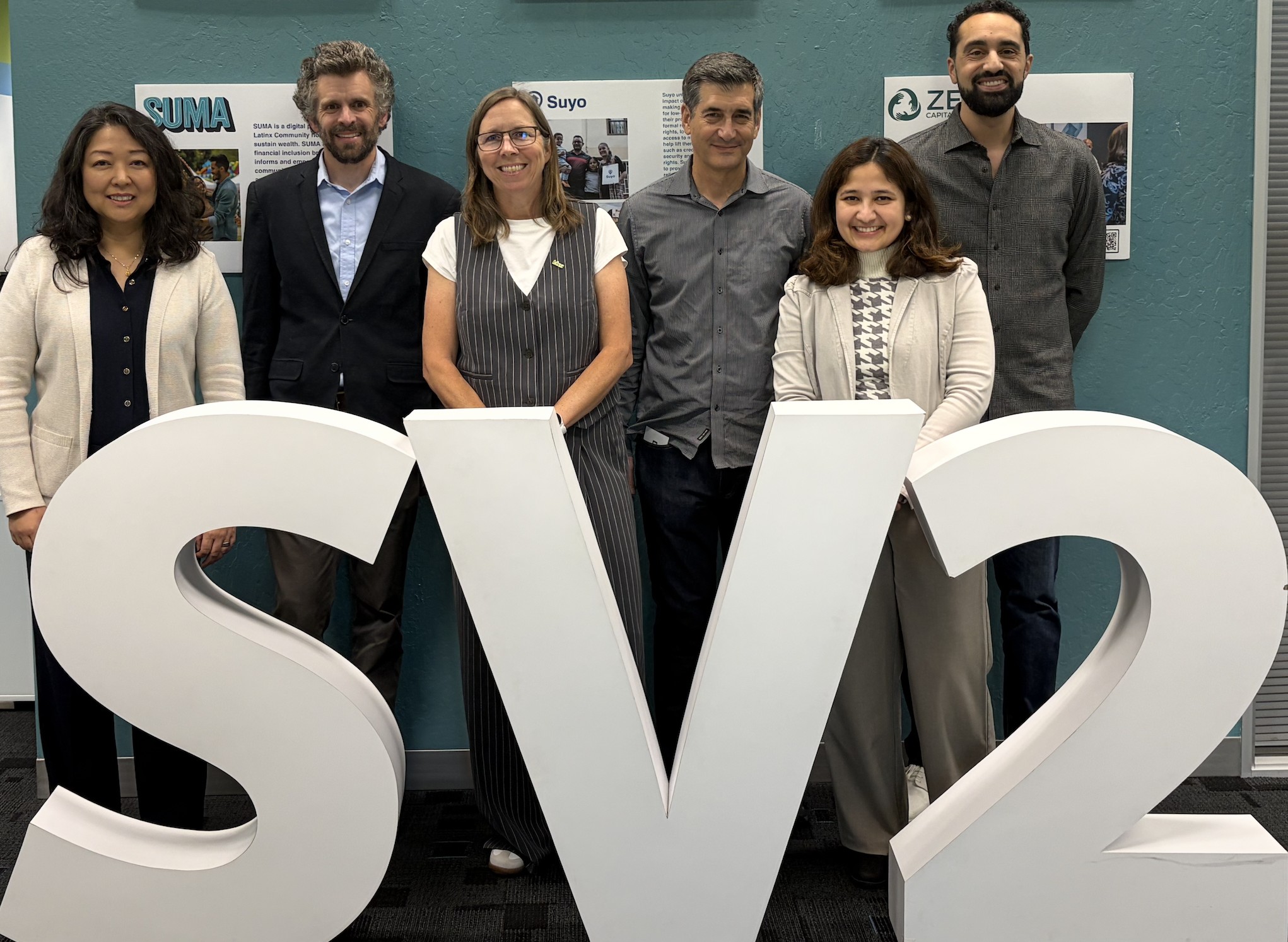
SV2 Donor Partners and ecosystem partners joined us at the SV2 office in Redwood City for four lightning talks and a round of table discussions. SV2 CEO David Onek and Suhani Mohan, Director of Impact Investing, opened the afternoon. Suhani framed it around a spectrum, with grants for nonprofits at one end, equity for startups at the other, and a growing set of tools in between, such as recoverable grants, nonprofit lending, revenue-based financing and first-loss guarantees. Our spring Spotlight covered employee ownership financing, catalytic social lending, first-loss guarantees and donor advised funds. This time we added four more.
Paul Belknap, Director of Impact Investing at the Miller Center for Global Impact at Santa Clara University, explained how Miller Center Capital pools recoverable grants and first-loss grants from donors into its Innovation Fund. The fund makes short-term loans to social enterprises in the Miller Center’s network and pairs each loan with mentoring. Donors get their recoverable grants back after seven years, and in the meantime the same money can be lent out two to three times.
Vivienne Hsu, founder and CEO of LENDonate, made the case for lending to nonprofits. LENDonate originates loans to creditworthy 501(c)(3) organizations and connects them with mission-aligned capital from foundations, RIAs and individual investors. Many of those funders want to support local nonprofits but don’t have the capacity to underwrite and service loans on their own. Her talk raised a question that carried into the roundtables: when can a loan do more for a nonprofit than a grant?
Deb Parsons, who spoke at our spring Spotlight while at ImpactAssets, came back as Executive Vice President of Strategic Partnerships at Kiva. Kiva lenders, from individuals to foundations and companies, fund loans that local lending partners make to entrepreneurs, often with financial education and business training alongside. As loans are repaid, lenders can put the same money back to work.
Justin Steele, co-founder and CEO of Kindora, a public benefit corporation that builds AI tools to help nonprofits find funders and win grants, took us inside a founder’s decision. Kindora wanted the nonprofits it serves, and the people around them, to be able to own a piece of the company without pushing it toward a near-term exit. Its answer was a standard SAFE with a revenue share added. We loved hearing the founder perspective on raising through a blended instrument. His takeaway: keep the familiar wrapper and put the new idea inside it.
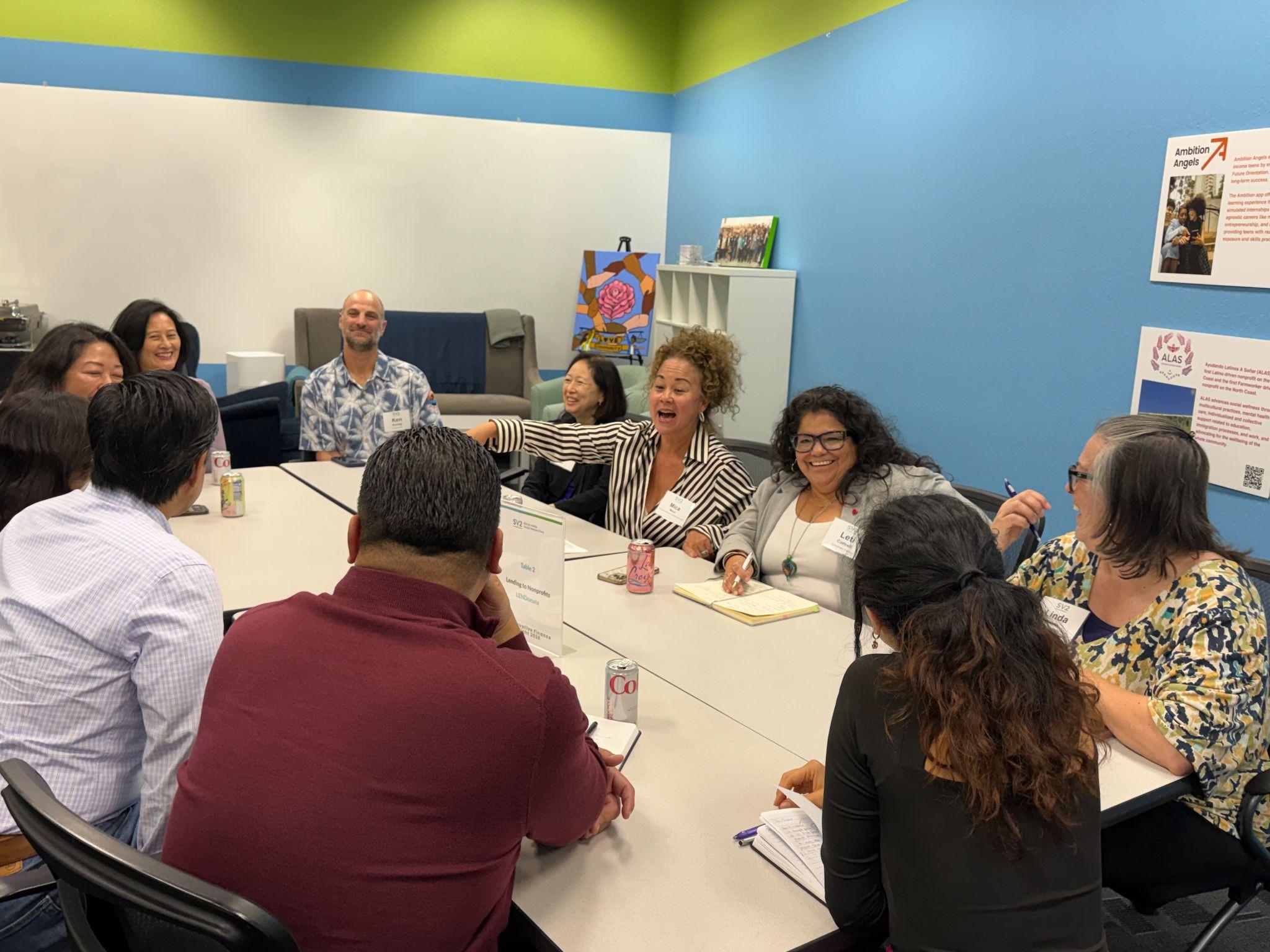
After the talks, the room split into four roundtables, one per speaker. Each table was hosted by a member of SV2’s Investment Committee, with an SV2 staff member taking notes. The tables took on recoverable grants and low-interest debt for social enterprises, lending to nonprofits, global microlending, and using a revenue share to raise from community investors. Conversations started with what in the talks had shifted people’s thinking about capital, then turned to the harder part: what keeps these models from being used more widely, and what funders can do about it.
What tied the four talks together was capital that comes back. With a recoverable grant, a nonprofit loan, a microloan or a revenue share, money goes out, returns, and can be put to work again, so the same dollar can support more than one organization over time. Thank you to Paul, Vivienne, Deb and Justin, to the IC members and staff who hosted our tables, and to everyone who joined us. If you’d like to learn more about any of these tools or about impact investing at SV2, get in touch with us.